

Hi everyone, I'm Teacher Tu.
Over the past two days, I have seen many people discussing one question:
For scientific figure drawing today, which model is actually easier to use?
Some people think GPT Image 2 has better value for money. Some think Nano Banana is fast and has a good style. Others say scientific figures cannot only be judged by whether they "look good"; the key is whether they can really be used in papers, reviews, group meetings, and grant proposals.
This time, we used real tests to give a conclusion.
The whole workflow was like this:
First, I selected 10 real scientific figure scenarios, covering medicine, biology, materials, energy, chemistry, AI, environment, and social science as much as possible.
I used Codex to run the whole evaluation workflow and called two image models separately to generate images.
Both models used the same prompts, to avoid bias caused by unfair prompts.
Finally, I asked Claude to play the role of a "Nature editor" and score each figure from the perspective of a scientific paper figure.
What scientific figures fear most has never been "not flashy enough"
When many students use AI to make scientific figures for the first time, they are easily fooled by that "wow, this looks so advanced" visual impact. The background is bright, there are lots of lighting effects, the cells look three-dimensional, and the colors feel dreamy.
But when you really put it into a paper or a group-meeting PPT, problems appear immediately. Journal editors care more about professionalism and accuracy.
The judge for this evaluation was Claude. It scored the figures across the following 8 dimensions: scientific logic, information hierarchy, paper-style layout, text readability, arrows and causal relationships, credibility of disciplinary expression, scientific-figure feel, and the cost of later revision.
Each item was scored from 1 to 5, with a total score of 40.
Below, let's look at the results in each scenario:
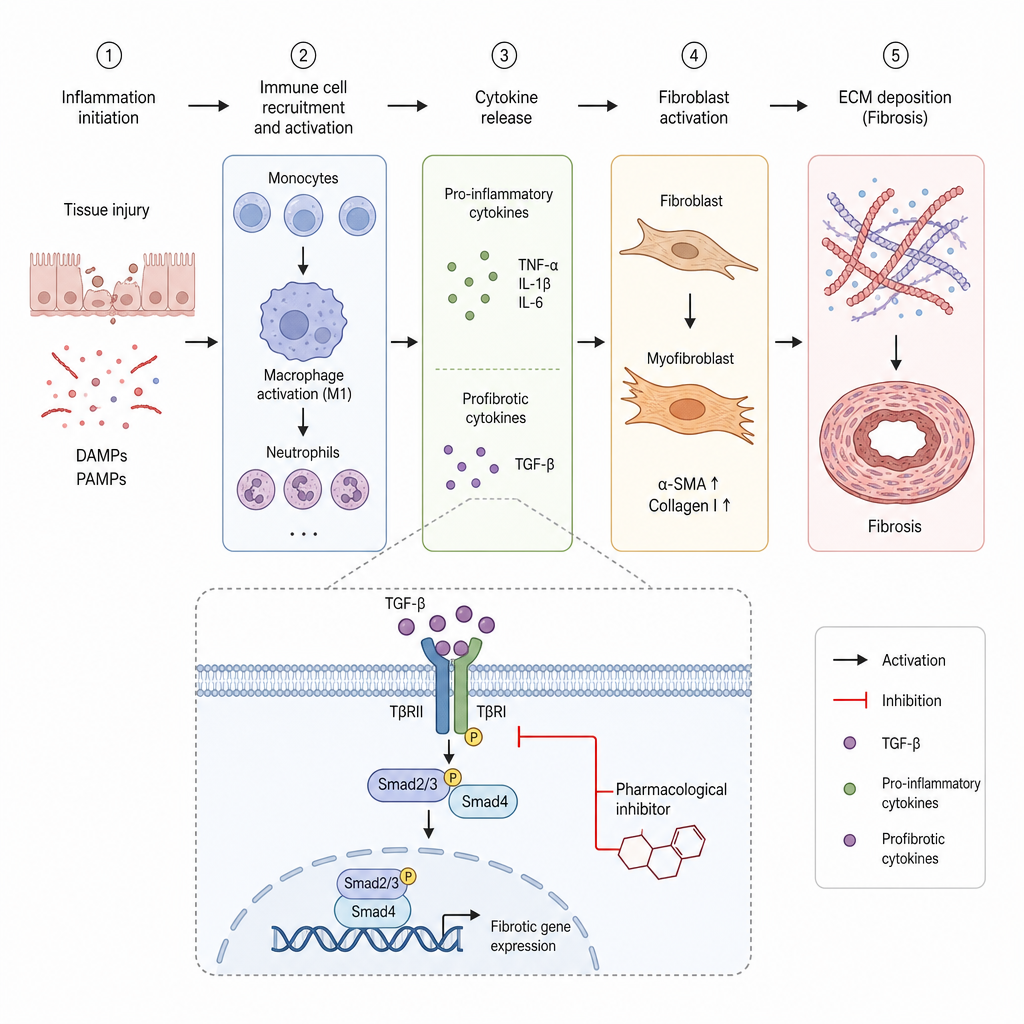
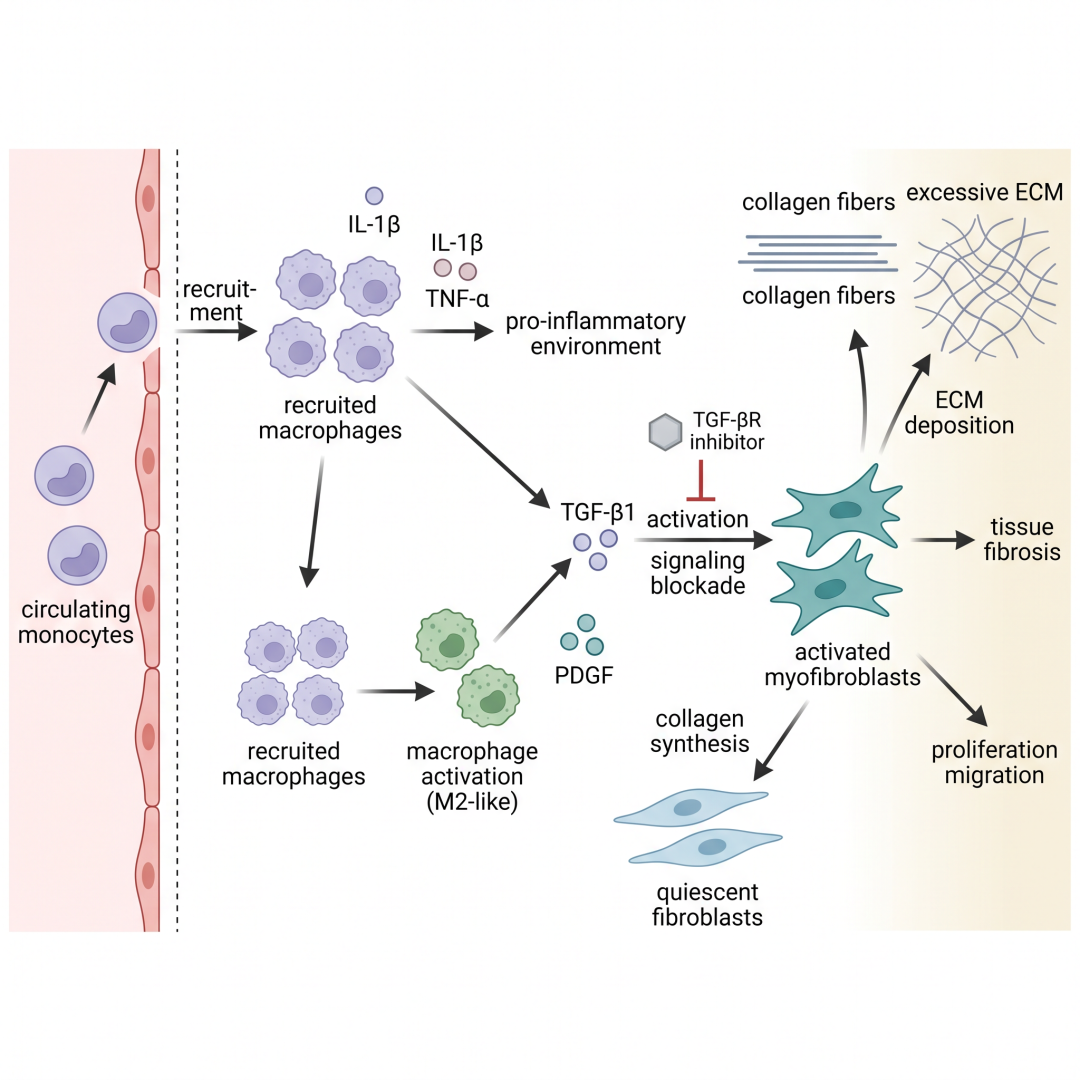
01 | Biomedical mechanism figure: inflammation promotes tissue fibrosis and drug intervention
This type of figure is most common in medicine, pharmacology, pathology, oncology, and immunology.
Its core is not to "draw a few cells," but to clearly show upstream inflammation, midstream signaling, and downstream fibrosis outcomes.
GPT Image 2 result
Nano Banana result
Prompt used this time
Create a professional scientific mechanism figure about inflammation-driven tissue fibrosis and pharmacological intervention. Show inflammatory cell recruitment, macrophage activation, cytokine release, fibroblast activation, extracellular matrix deposition, and a drug blocking the TGF-beta signaling axis. Use a layered left-to-right causal layout with clear activation and inhibition arrows, restrained colors, sparse academic labels, and a publication-ready white-background schematic style.
Nature editor evaluation
The advantage of GPT Image 2 is that the mechanism chain is more complete. It not only drew inflammatory cells, macrophages, fibroblasts, and ECM deposition, but also separated out molecular-level pathways such as TGF-beta/Smad.
Nano Banana's figure is more like a conceptual overview. Visually, it is also usable, but the mechanism depth is clearly not enough.
Summary of this group
For biomedical mechanism figures, the most important thing is the causal chain. Who activates whom, who inhibits whom, and what pathological outcome finally occurs all need to be drawn clearly enough.
02 | Molecular biology mechanism figure: CRISPR-Cas9 gene editing
This type of figure tests branching logic.
A CRISPR figure cannot only draw Cas9 and DNA. It must express: PAM recognition, target DNA binding, double-strand break generation, and the two repair pathways NHEJ / HDR.
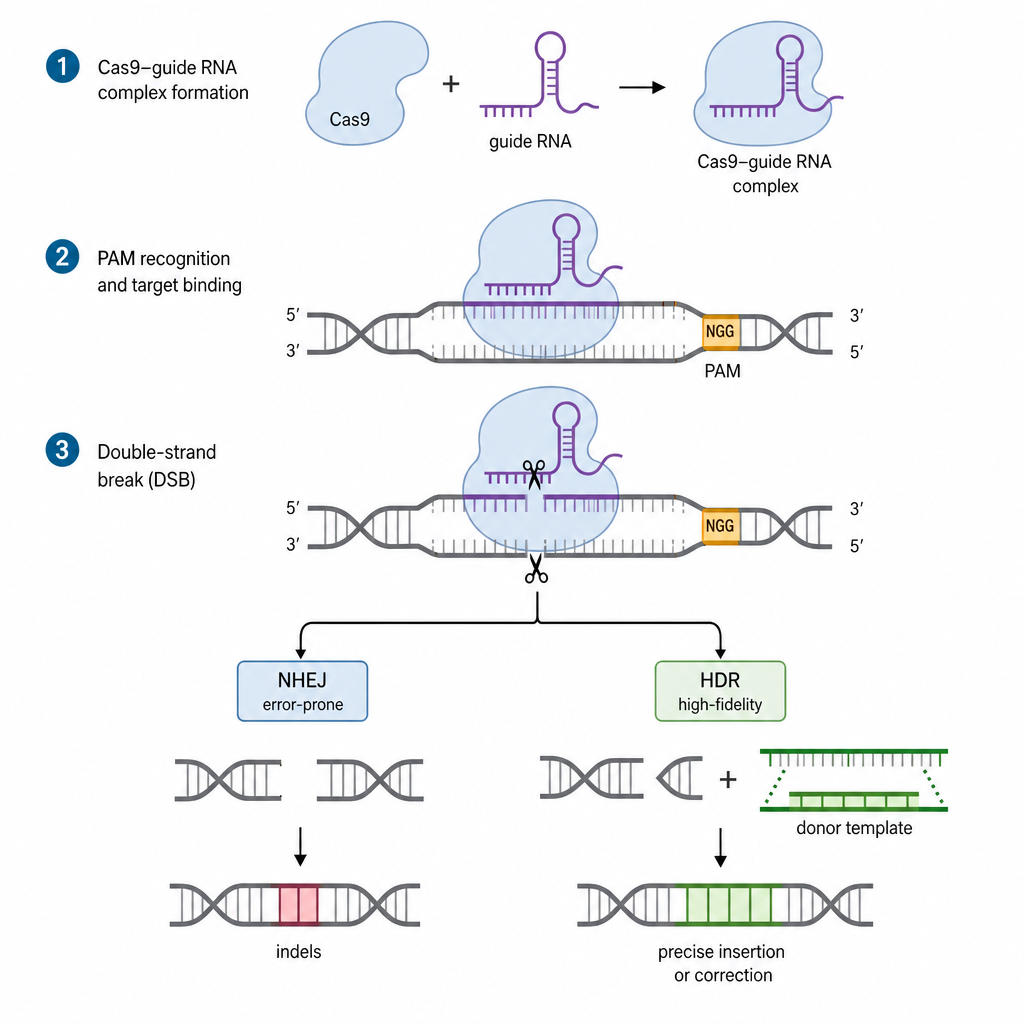
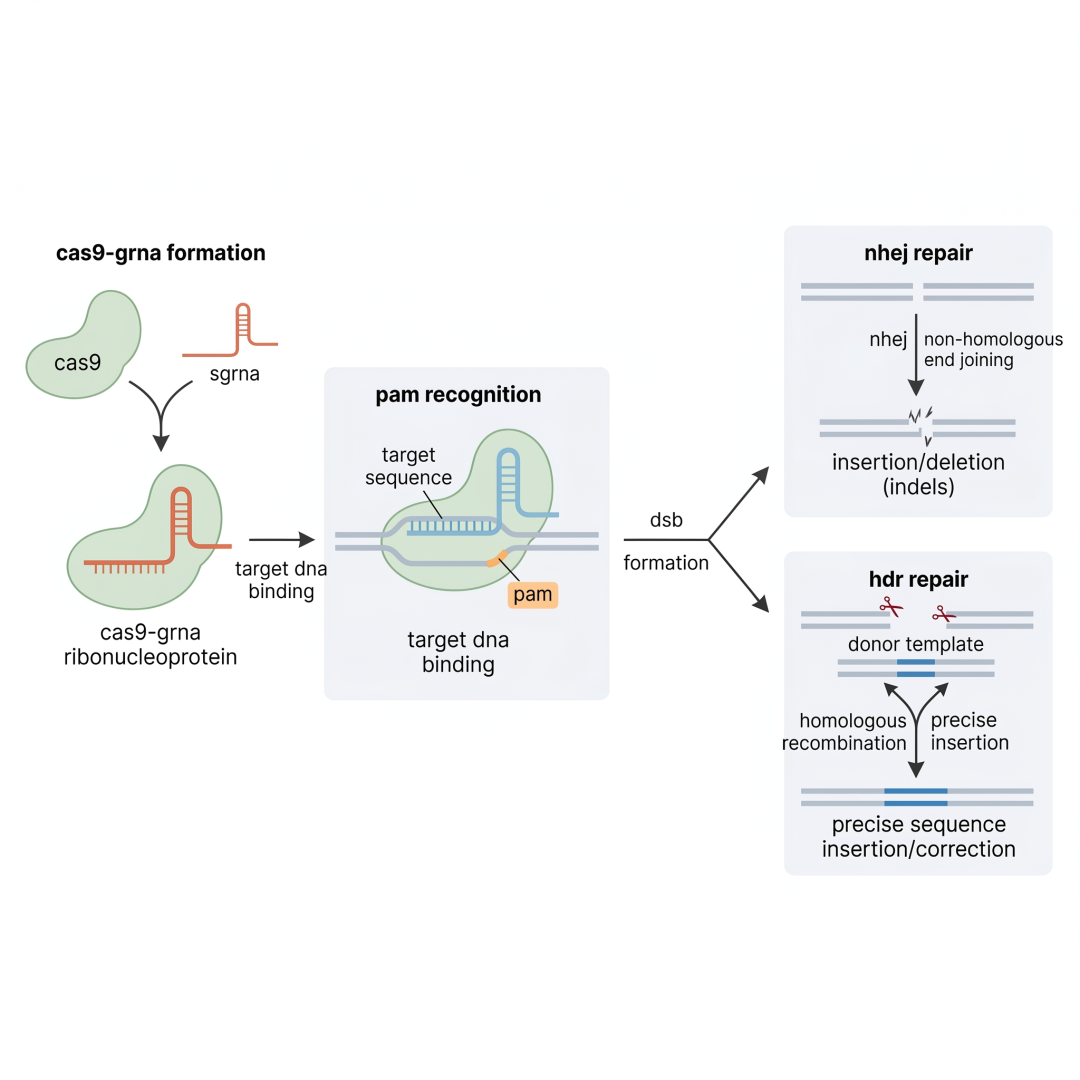
Create a publication-ready CRISPR-Cas9 genome editing mechanism figure. Show Cas9-guide RNA complex formation, PAM recognition, target DNA binding, double-strand break formation, and two downstream repair branches: NHEJ leading to indels and HDR leading to precise insertion or correction. Use a clean layered mechanism layout, concise labels, clear branch arrows, and a flat vector-like scientific style on a white background.
In this group, GPT Image 2 scored 39, almost a full score.
Claude thought its numbering, branching paths, NHEJ/HDR distinction, and PAM labels were all relatively clear. Nano Banana's main problem was that the layout was scattered and the visual hierarchy was unstable, so the viewer had to "guess" the order.
A molecular mechanism figure cannot only draw objects. It must draw steps and branches. Especially for path differences such as NHEJ / HDR, a clear branching structure must be used to express them.
03 | Experimental workflow figure: single-cell RNA-seq from sample to analysis
What workflow figures fear most is not the inability to draw instruments, but a confused sequence of steps.
Single-cell RNA-seq needs to express at least: tissue processing, single-cell suspension, microfluidic capture, library preparation and sequencing, UMAP clustering, marker gene analysis, and cell-type annotation.
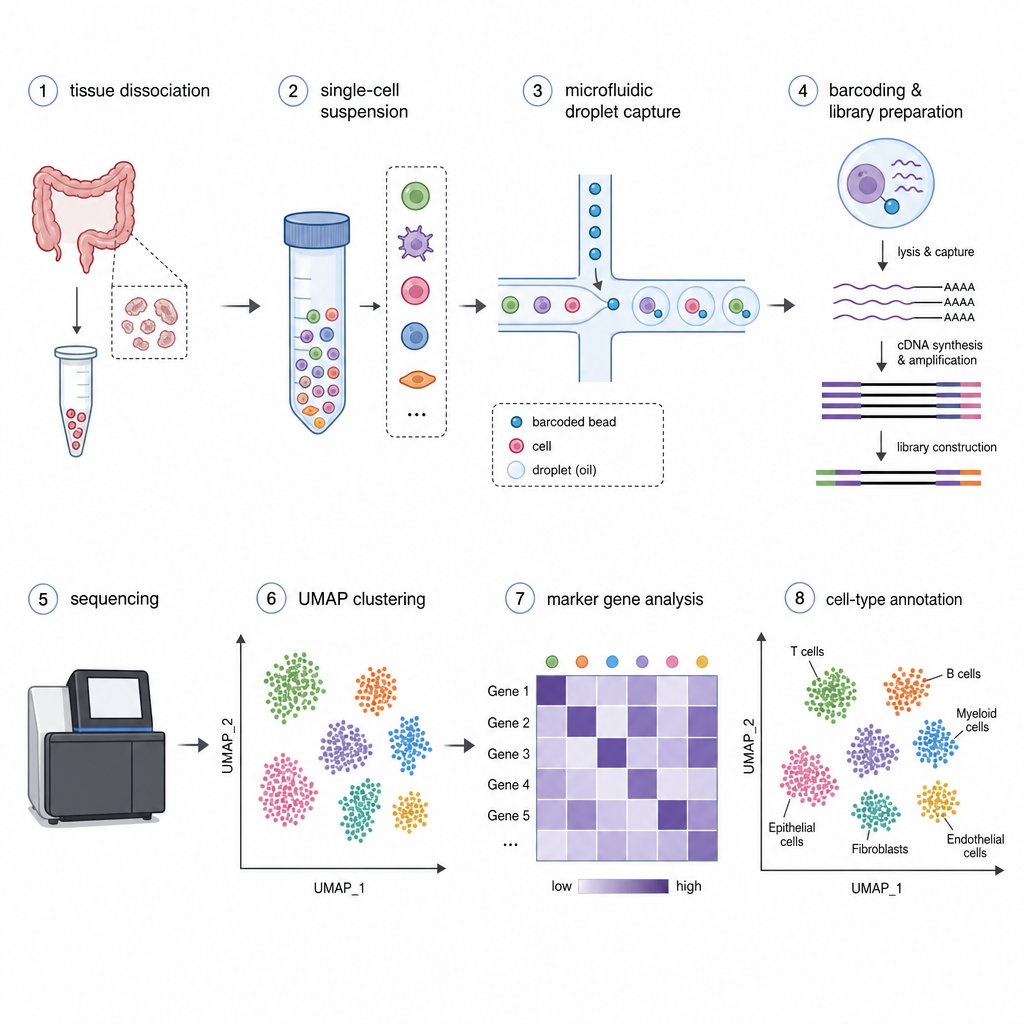
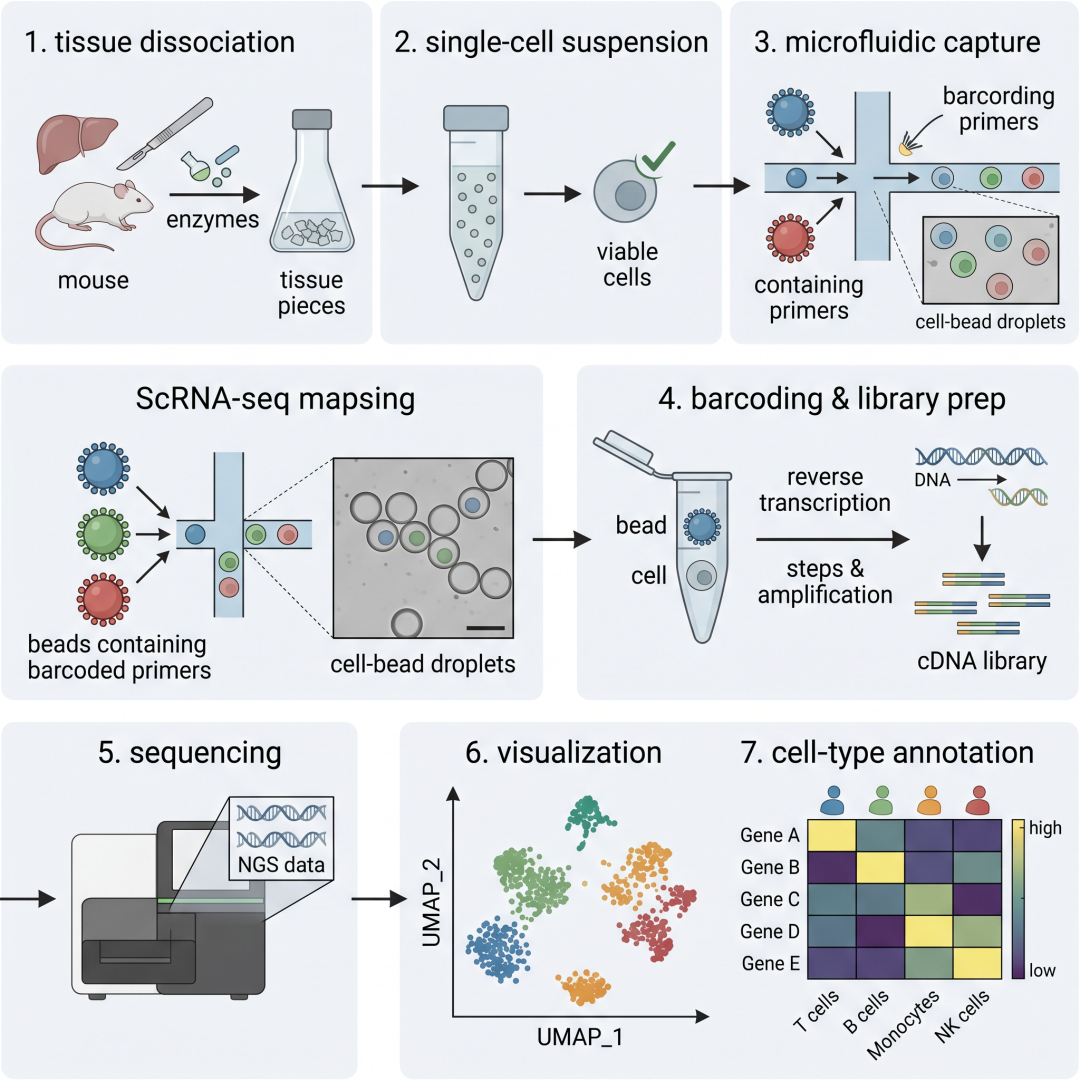
Create a stepwise experimental workflow figure for single-cell RNA sequencing. Show tissue dissociation, viable single-cell suspension, microfluidic droplet capture, barcoding and library preparation, sequencing, UMAP clustering, marker gene analysis, and cell-type annotation. Use a left-to-right modular workflow with separate visual zones, clear arrows, minimal text, and a journal methods-figure style.
GPT Image 2's workflow is more like a methods overview in a paper. It goes from left to right all the way through, and readers are less likely to get lost.
Nano Banana gave more biological context, such as tissue, animals, and cell states, but the two-row layout interrupted the sense of process. For a group-meeting presentation, Nano's figure may also work; but for a paper methods figure, GPT is more stable.
The first principle of an experimental workflow figure is sequence. Readers should not have to guess where the next step is.
04 | Graphical Abstract: LNP-mRNA delivery and immune activation
The hardest part of a Graphical Abstract is telling a complete story in one figure.
It is not that the more elements the better. Instead, readers need to know: what the strategy is on the left, what process happens in the middle, and what biological result is obtained on the right.
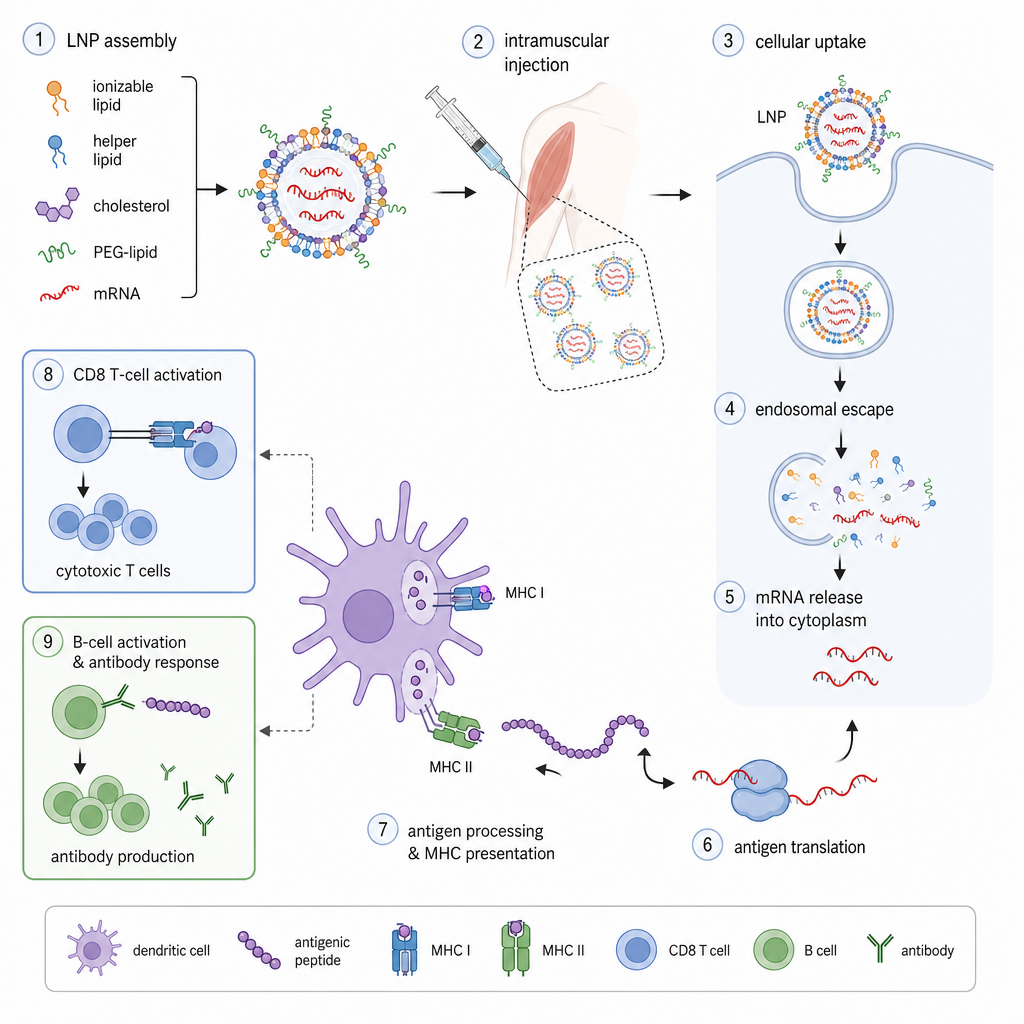
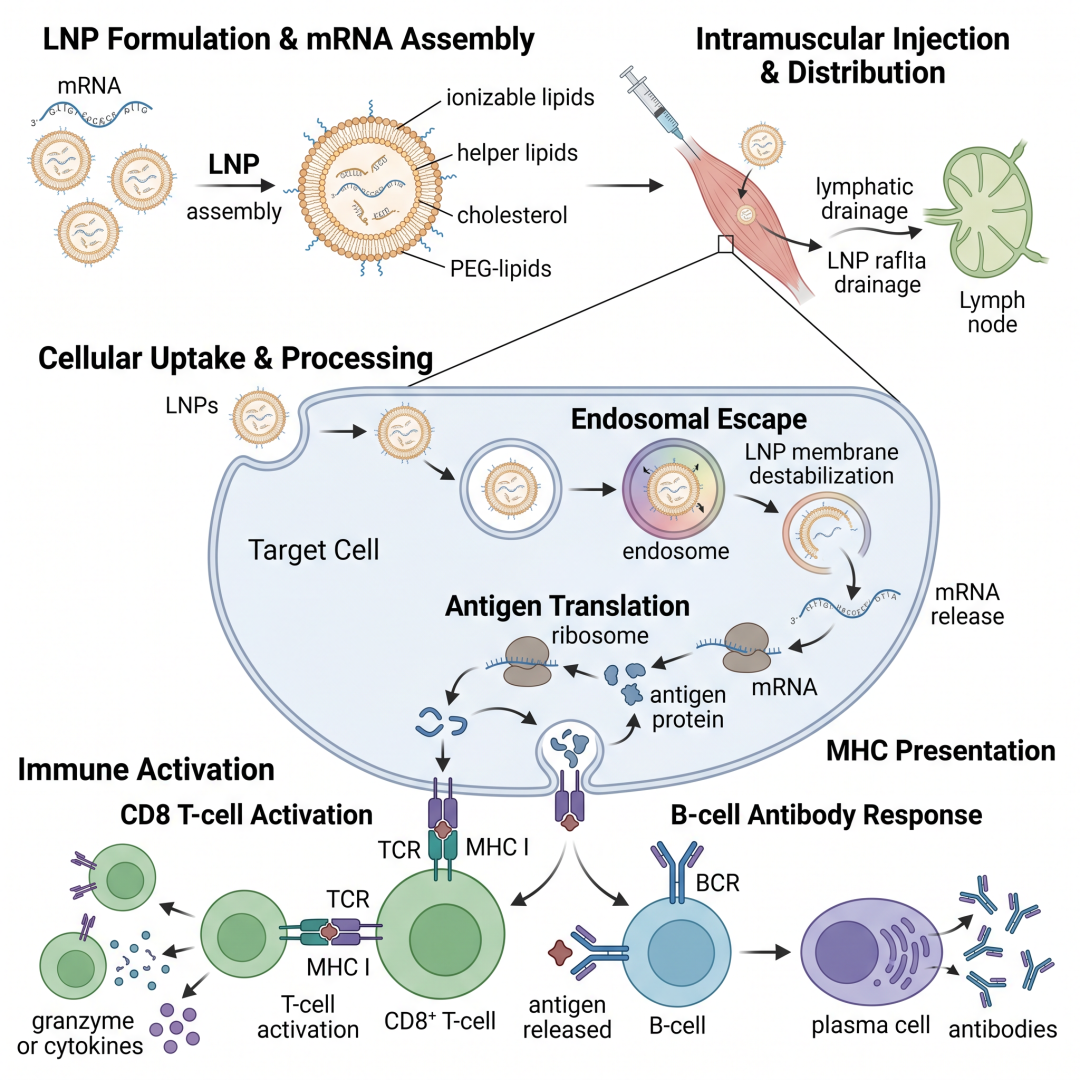
Create a scientific graphical abstract for lipid nanoparticle mRNA delivery and immune activation. Show ionizable lipid nanoparticle assembly around mRNA cargo, intramuscular injection, cellular uptake, endosomal escape, mRNA release into cytoplasm, antigen translation, MHC presentation, B-cell antibody response, and CD8 T-cell activation. Use a balanced graphical-abstract composition with clear causal flow, sparse labels, and a polished biomedical vector style.
GPT used numbering to connect LNP assembly, injection, uptake, endosomal escape, antigen translation, and immune activation.
Nano Banana also included quite a lot of content, and even added context such as lymph nodes, but the picture was obviously more crowded, and text and arrows were more likely to fight each other.
The key to a Graphical Abstract is not to stuff every element into it, but to let readers understand the research story at a glance.
05 | Materials science mechanism figure: photothermal antibacterial material disrupting biofilm
Materials figures are very easy to fail.
Because you cannot only draw "material" and "bacteria"; you must draw how the material damages the bacteria.
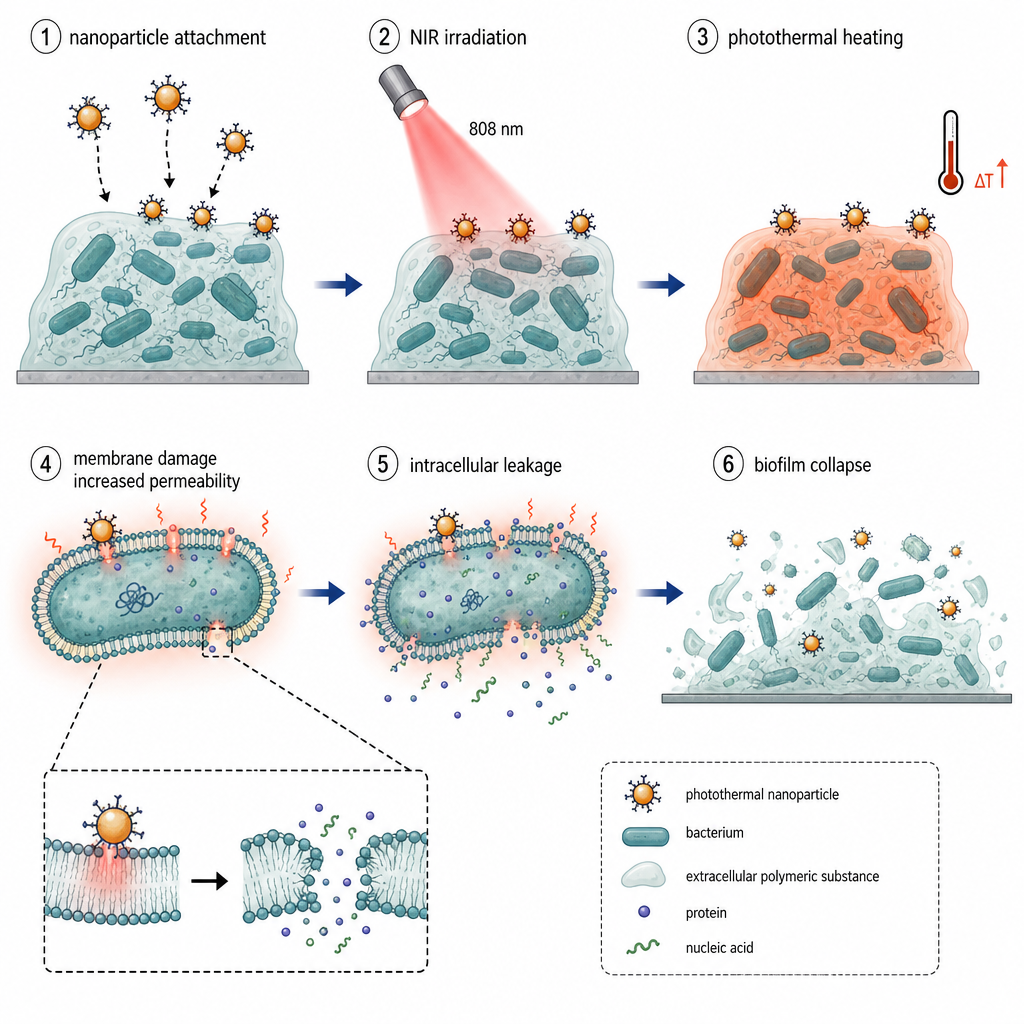
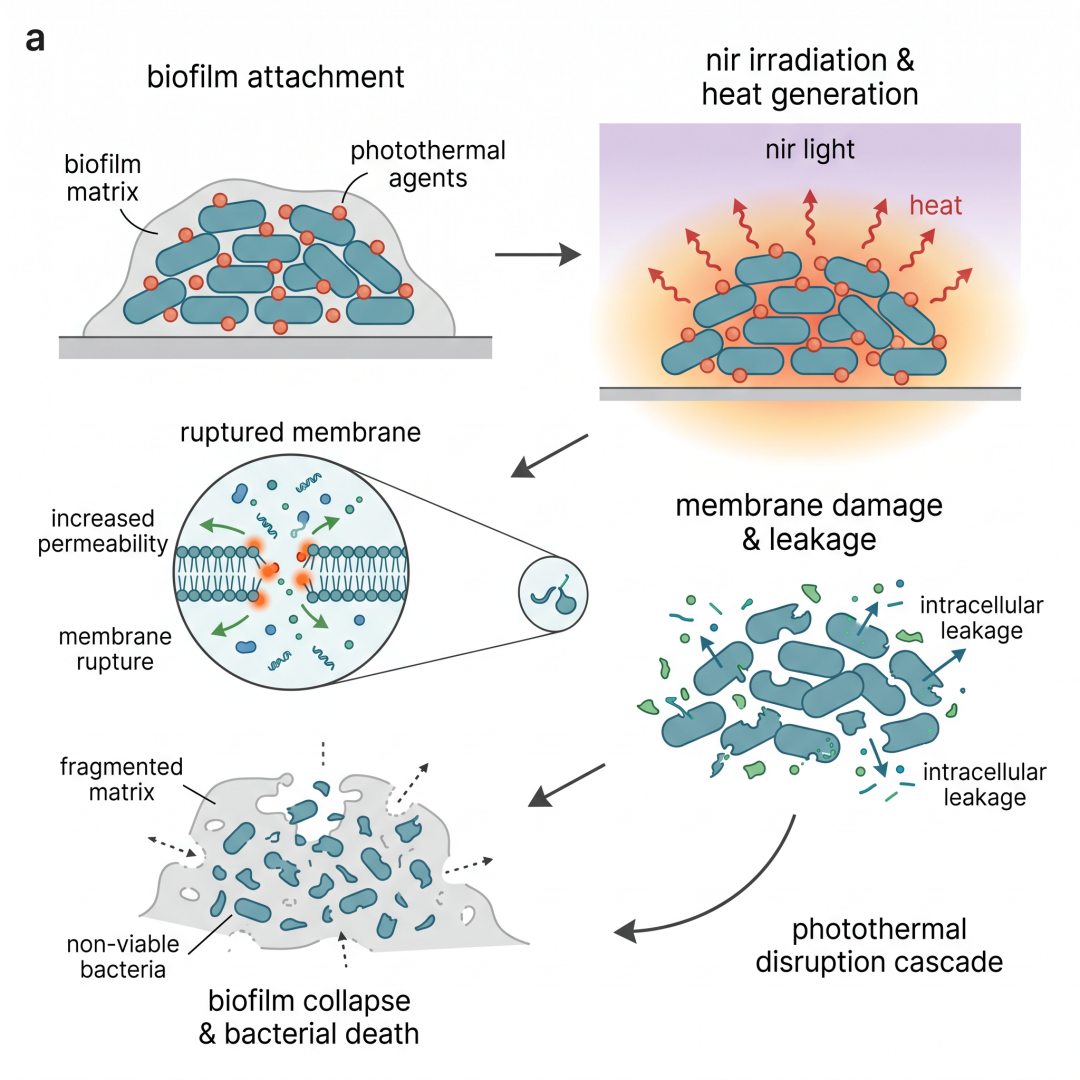
Create a publication-ready mechanism schematic for a photothermal antibacterial nanomaterial disrupting bacterial biofilm. Show nanomaterial attachment to biofilm, near-infrared light irradiation, local heat generation, bacterial membrane damage, increased permeability, intracellular leakage, and biofilm collapse. Include one small zoom-in inset for membrane rupture, use blue-green for bacteria and orange-red for heat damage, with clean arrows and a white background.
In this group, GPT scored 39. Claude specifically mentioned that GPT's details such as the zoom-in panel of membrane rupture, 808 nm near-infrared irradiation, temperature increase, and leakage of cell contents were relatively well done.
Nano Banana's figure was scientifically in the right direction, but the circular layout made the reading order insufficiently clear.
A materials mechanism figure cannot only draw the result. It needs to connect the material, stimulus, local reaction, cell damage, and final effect.
06 | Energy device structure figure: lithium-sulfur battery shuttle effect and suppression strategy
Energy device figures test cross-sectional structure and process arrows.
If a lithium-sulfur battery figure only draws a few electrodes, that is not enough. It needs to explain polysulfide shuttling, lithium-ion migration, and the suppression mechanism of the separator or interlayer.
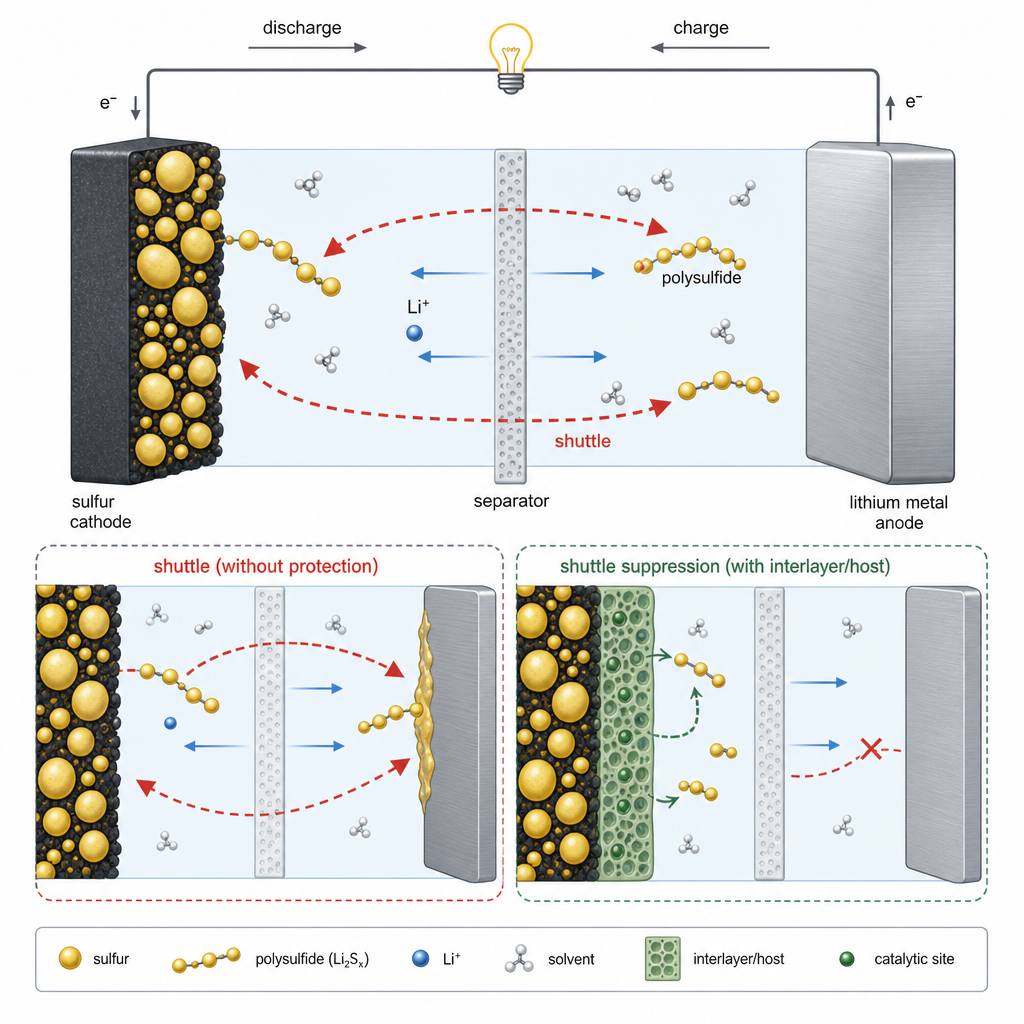
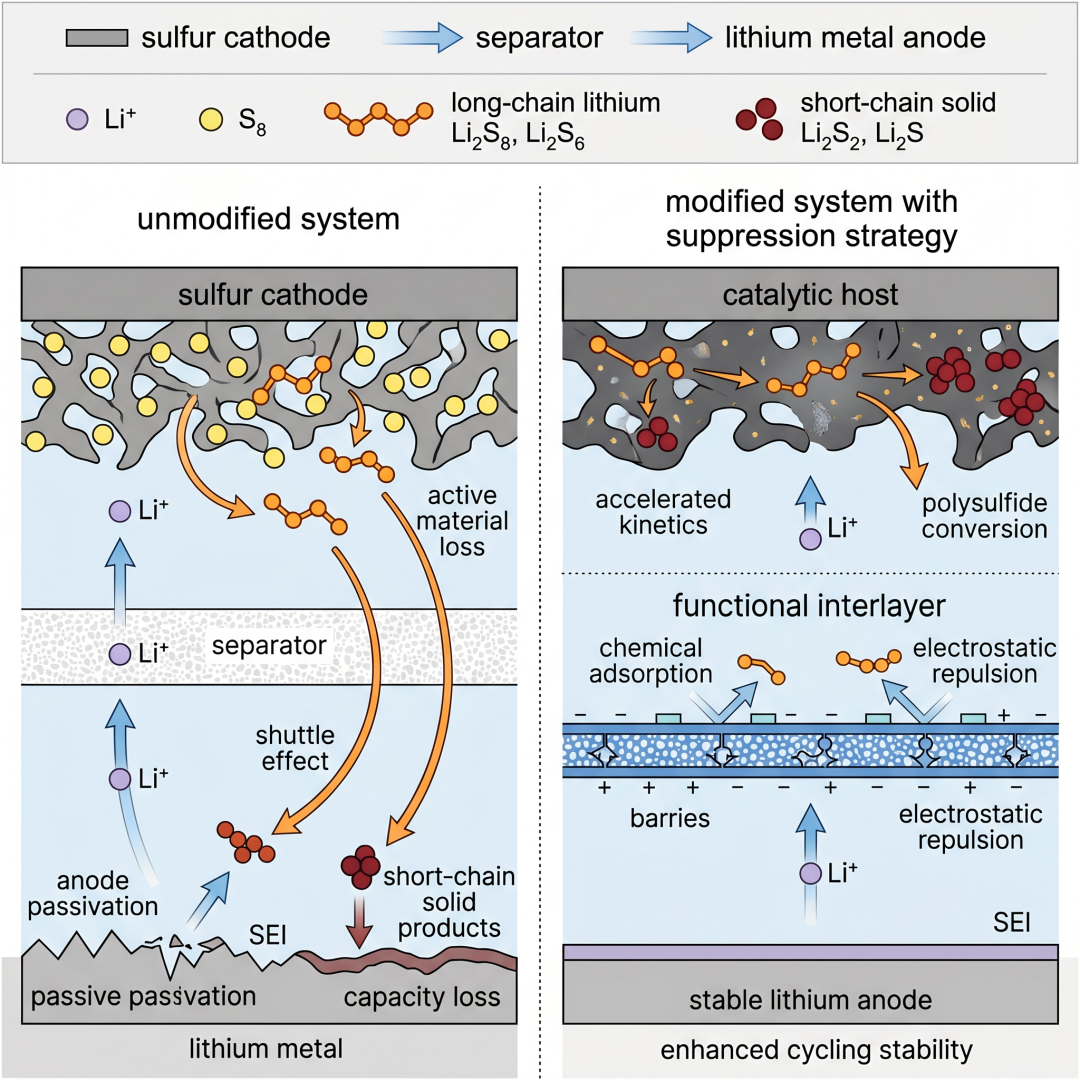
Create a scientific device schematic of a lithium-sulfur battery showing the polysulfide shuttle effect and suppression strategy. Show sulfur cathode, separator, electrolyte, lithium metal anode, lithium-ion migration, polysulfide diffusion, shuttle pathway, and a modified interlayer or catalytic host suppressing polysulfides. Use a clean cross-sectional layout with arrows for ion transport and shuttle inhibition, suitable for an energy materials review figure.
GPT Image 2's figure is more like a schematic in a review article, with a main figure plus a comparison panel, making it easy to read.
Nano Banana gave more mechanism details, but it was a bit too full. Labels and arrows were piled together, which instead reduced the efficiency of information communication.
Energy device figures need to explain both structure and transport. If the structure is not clear, the transport path has no anchor; if the arrows are not clear, the mechanism cannot be explained.
07 | Chemical synthesis route figure: multistep synthesis of a small-molecule drug
This group is the one where Nano Banana failed most obviously.
A chemical route figure is not enough if it only "draws a few molecules." It has relatively high requirements for reaction conditions, structural changes, yields, and catalytic cycles.
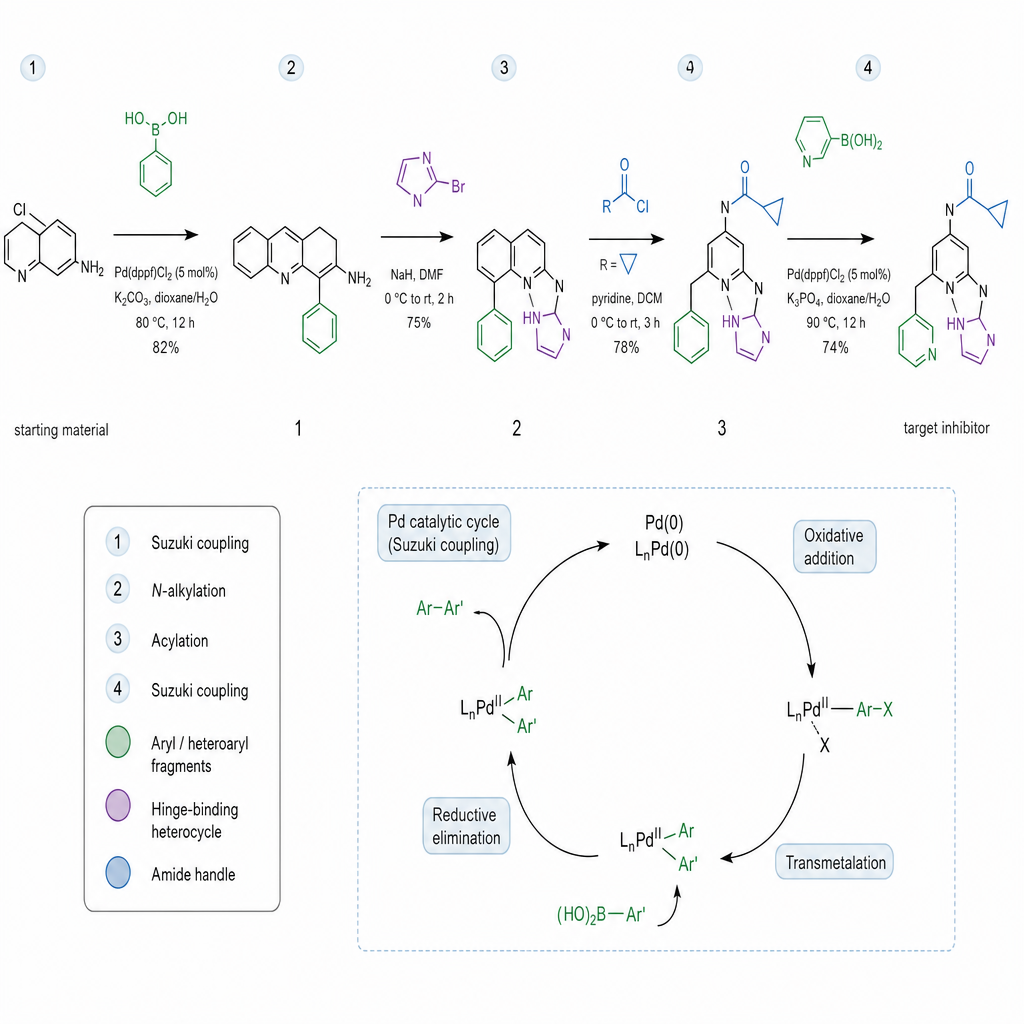
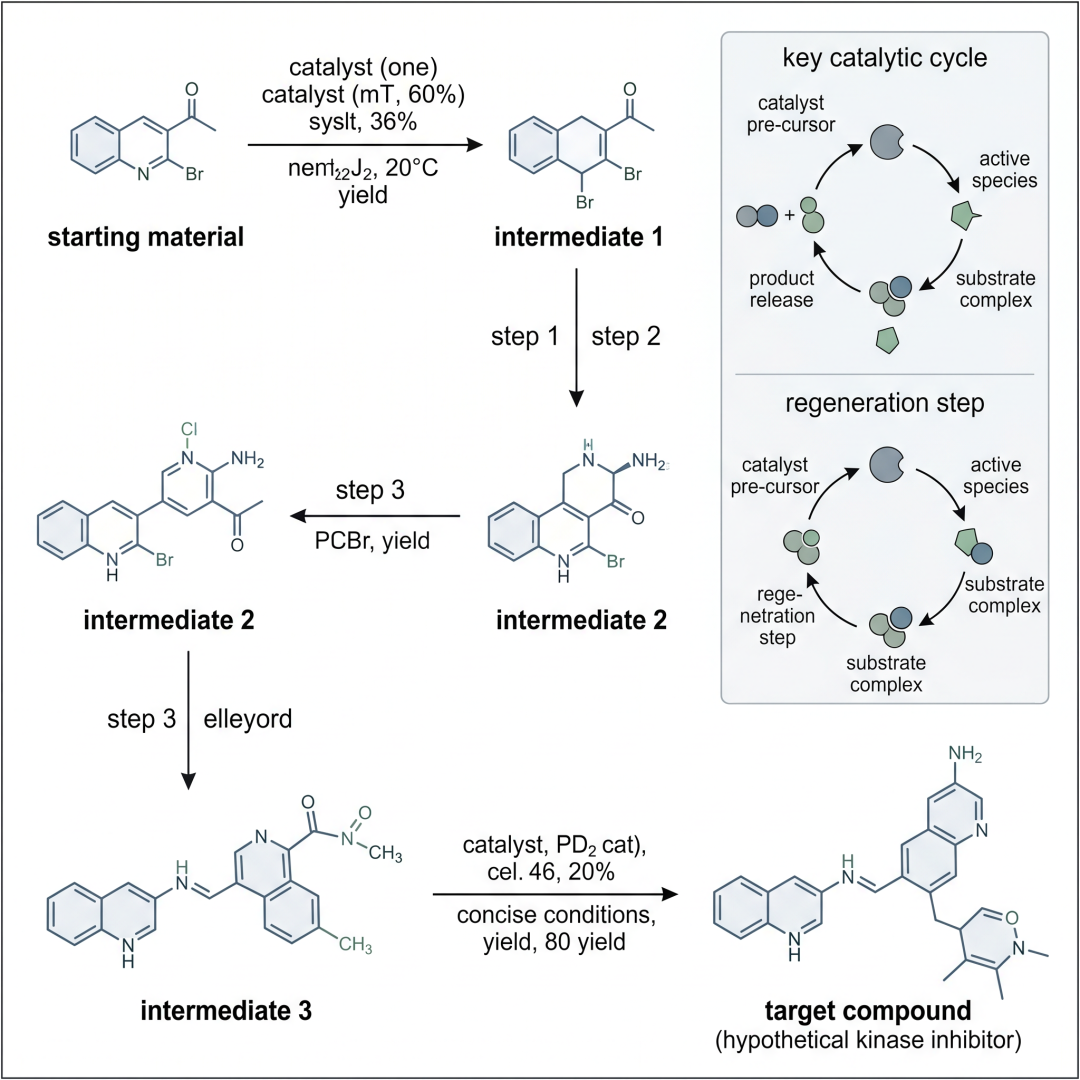
Create a professional chemistry research figure showing a multi-step synthetic route for a hypothetical small-molecule kinase inhibitor. Show starting material, three key intermediates, reaction arrows, concise reaction conditions, catalysts, yields, and final target compound. Add a small side panel summarizing a key catalytic cycle. Use a clean white-background journal reaction-scheme layout with compact spacing, consistent typography, and restrained colors.
Claude gave GPT 33 points, while Nano only got 16.
This also reminds us: for chemical figures, real data figures, and precise structural figures, AI still cannot be used directly as the final draft for now. It can help you build a visual plan, but in the end you still need to return to professional tools for verification.
The more precise the disciplinary figure is, the less you can judge only by whether it "looks like it." Structures, conditions, yields, atom connections, and other content all require professional human checking.
08 | AI architecture diagram: research agent from literature search to report generation
This type of figure is actually very friendly to AI models.
Because its essence is modules, arrows, inputs and outputs, and feedback loops.
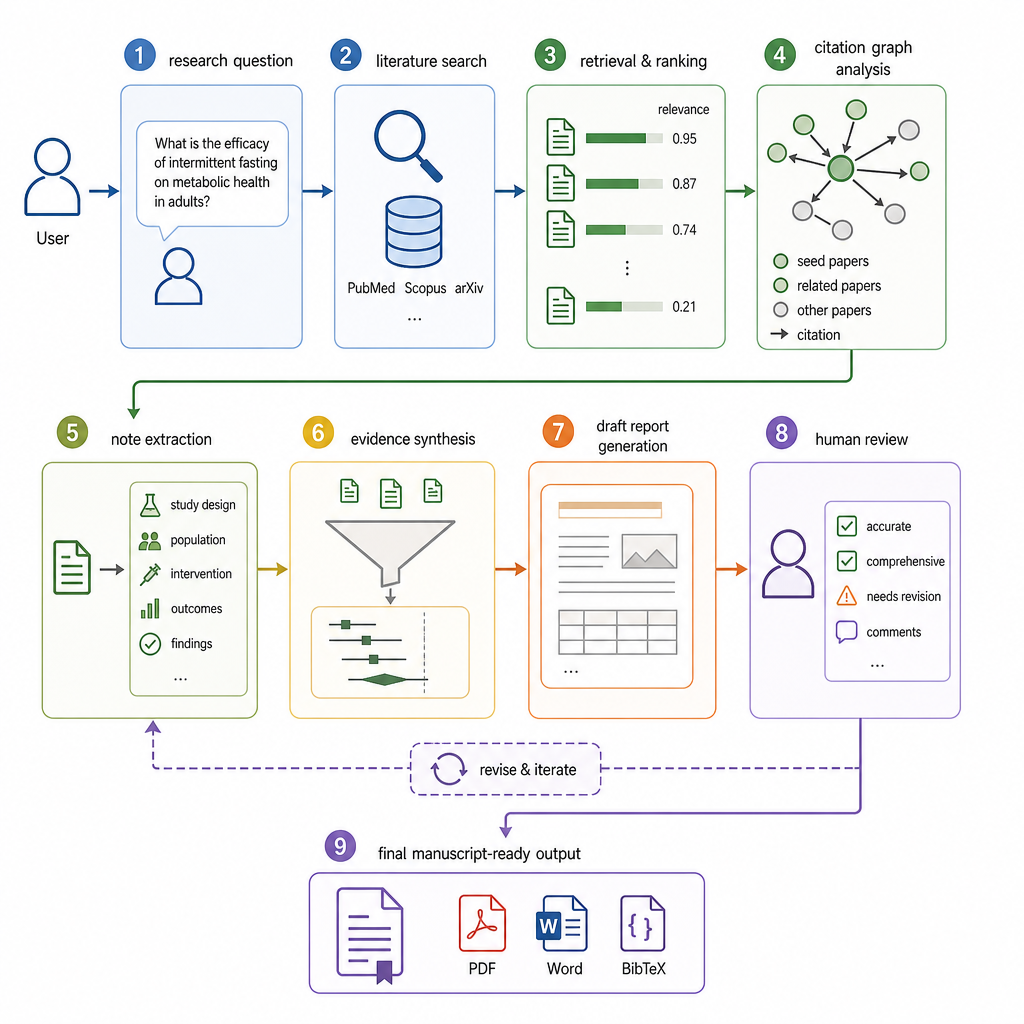
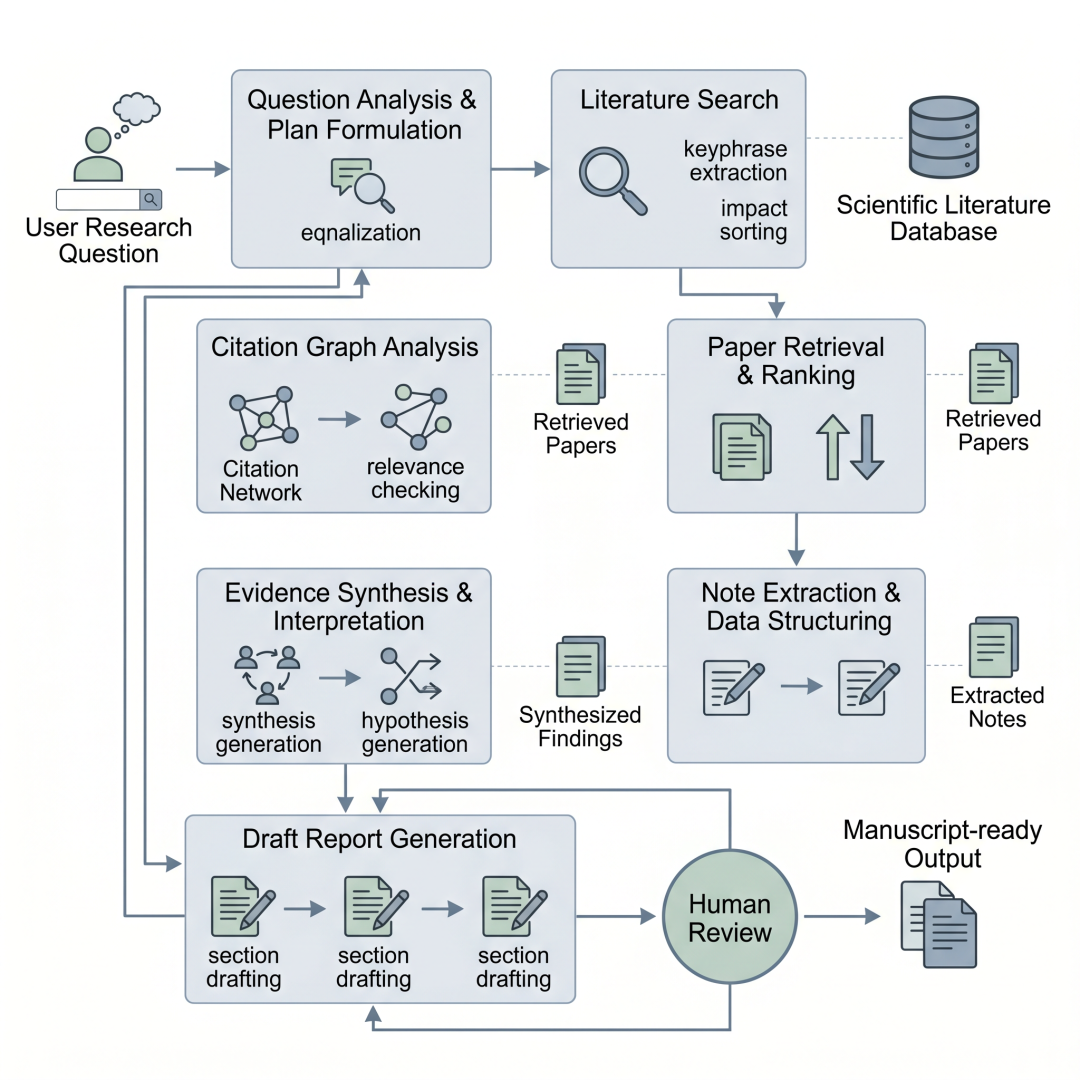
Create a professional AI research-agent architecture diagram. Show user research question input, literature search module, paper retrieval and ranking, citation graph analysis, note extraction, evidence synthesis, draft report generation, human review, and final manuscript-ready output. Use a modular system-architecture layout with boxes, arrows, data stores, and feedback loops. Keep it clean, publication-ready, and suitable for an AI methods paper.
GPT's advantage lies in stage numbering and color zoning.
Nano Banana also drew the core modules, but the direction of arrows, feedback loops, and expression of data storage were not as clear. If this were a methods figure for an AI paper, I would prefer GPT's version.
AI architecture diagrams should not pursue a "techy feel." What truly matters is what the input is, which modules exist, how the data flow moves, and what the output is.
09 | Environmental science process figure: microplastics entering rivers and oceans from urban runoff
Environmental process figures test "large-scale narration."
From urban sources to rivers, and then to oceans and food webs, readers must see the spatial pathway at a glance.
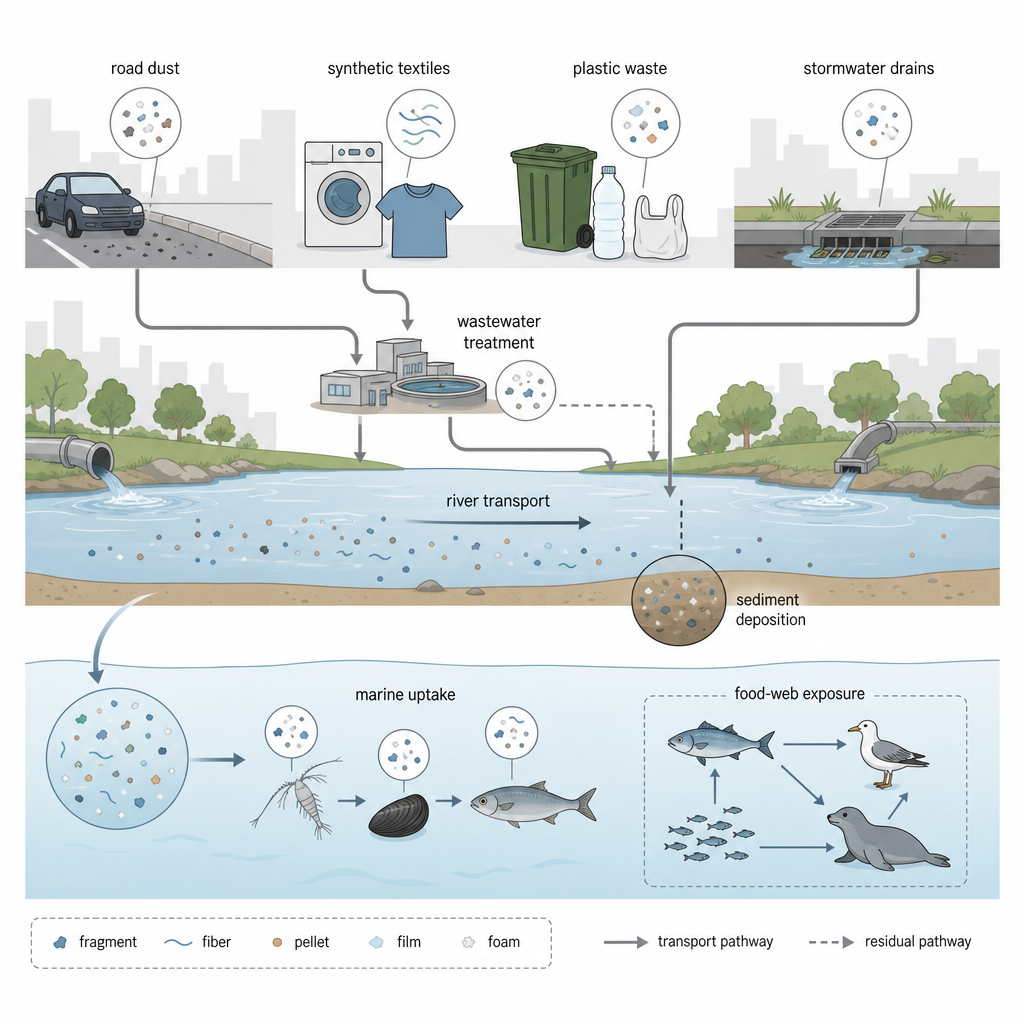
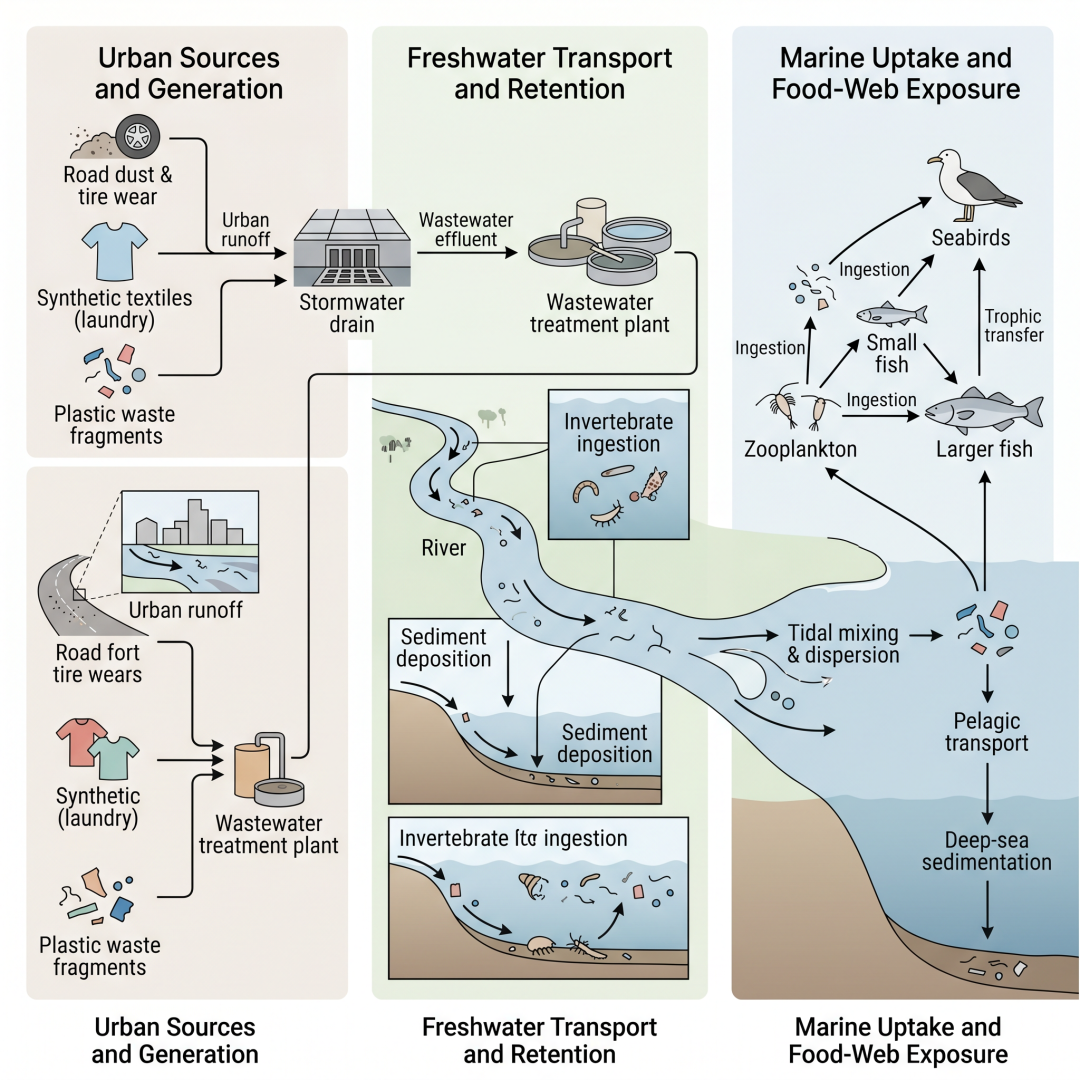
Create a scientific process overview figure showing microplastic transport from urban runoff into rivers and the ocean. Show sources such as road dust, synthetic textiles, plastic waste, stormwater drains, wastewater treatment, river transport, sediment deposition, marine uptake, and food-web exposure. Use a landscape process-flow layout from city to river to ocean, with clear arrows, restrained colors, and sparse academic labels.
This GPT figure fits the spatial reading order of "from city to ocean" relatively well.
Nano Banana also had rich content, but after being split into multiple panels, the continuous migration pathway was interrupted. For "large process" topics such as environmental science, continuity is very important.
For environmental process figures, it is best to write clearly the sources, transport pathways, deposition or exposure locations, and final ecological outcomes.
10 | Social science research design figure: randomized controlled trial of an online learning intervention
Finally, I deliberately chose a non-science-and-engineering scenario.
Many people think scientific figure drawing only belongs to medicine, materials, and biology. In fact, social science, educational psychology, and management also often need research design figures.
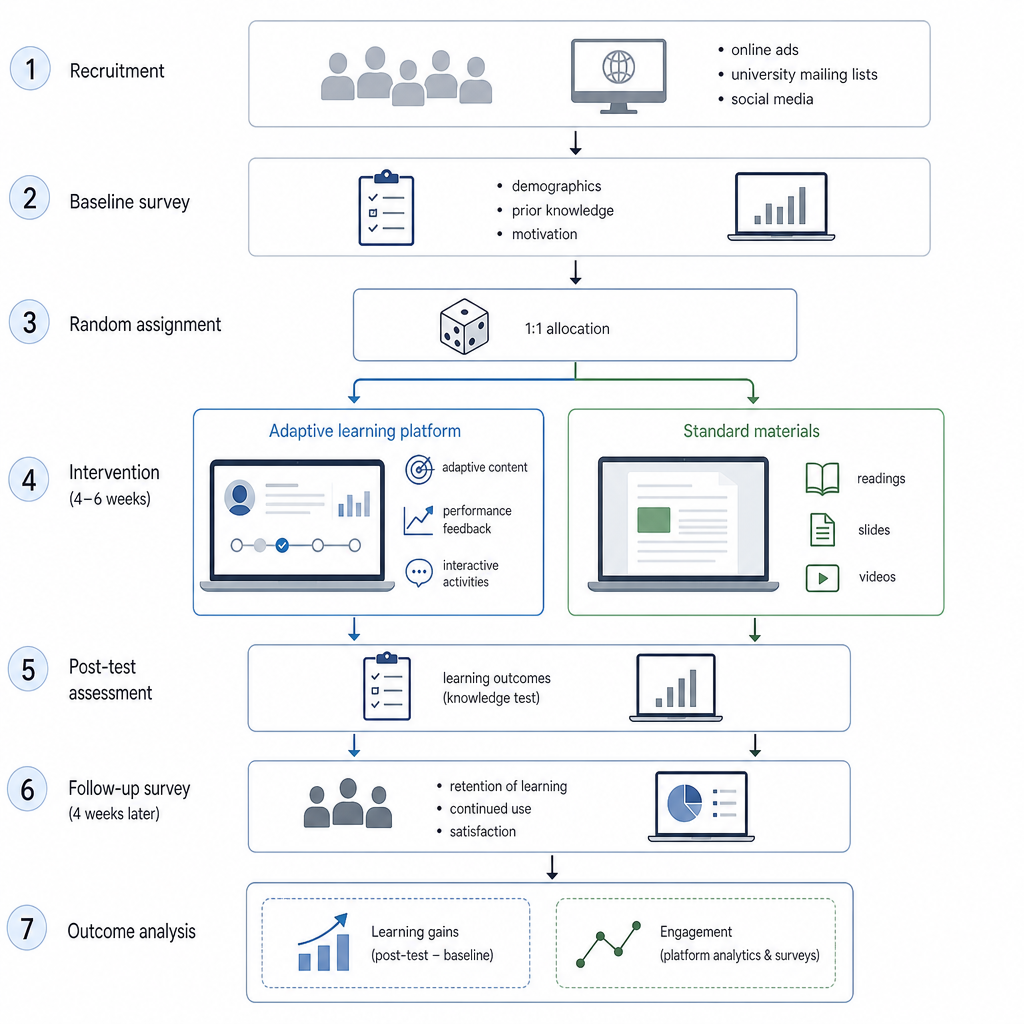
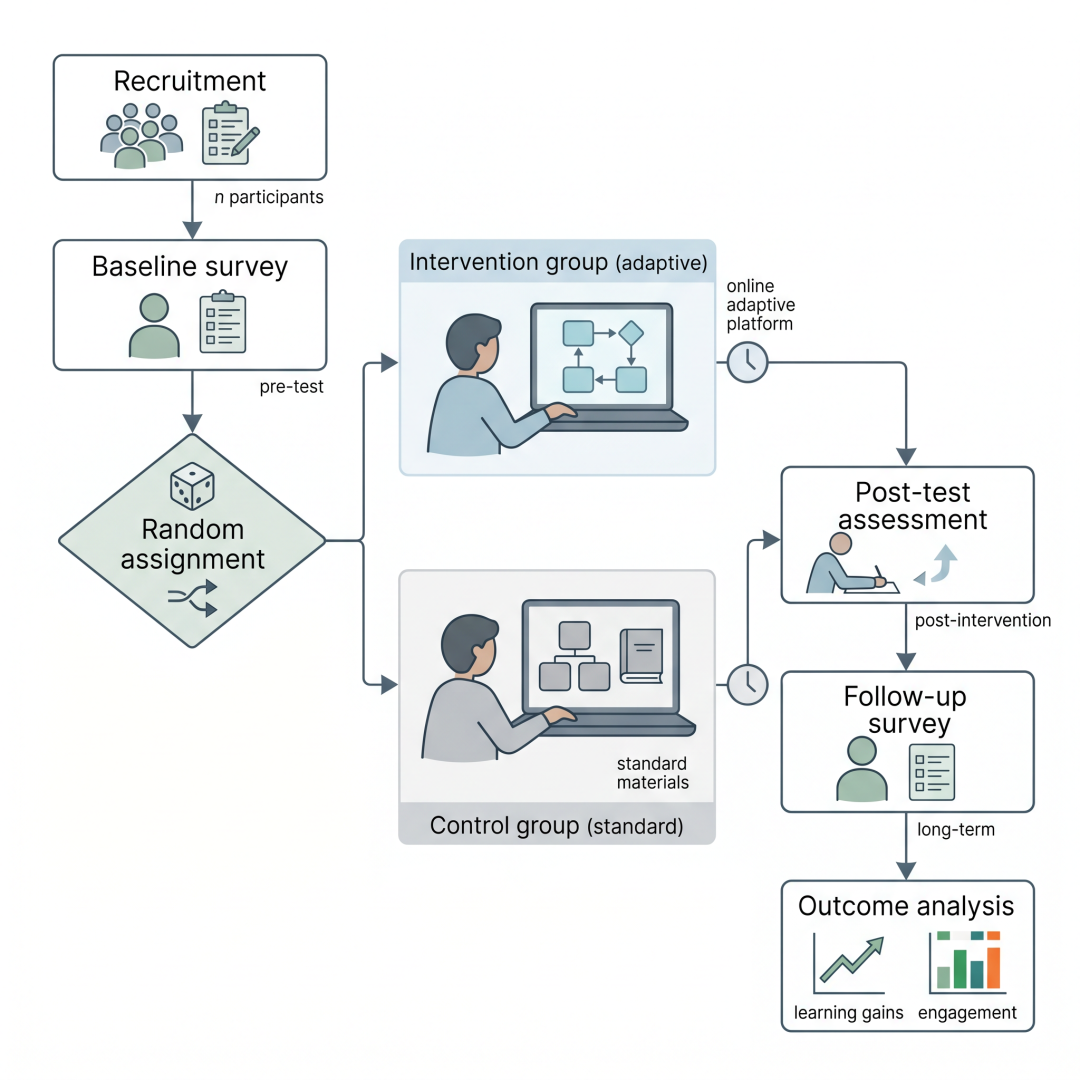
Create a clean research design diagram for a randomized controlled trial of an online learning intervention. Show participant recruitment, baseline survey, random assignment, intervention group using an adaptive learning platform, control group using standard materials, post-test assessment, follow-up survey, and outcome analysis for learning gains and engagement. Use a CONSORT-inspired flowchart style with clear branches, minimal labels, and a professional social-science journal aesthetic.
GPT Image 2 wins fairly clearly here again. It is more like a CONSORT-style research workflow figure, with randomization, intervention group, control group, follow-up, and outcome analysis all relatively well organized.
Nano Banana's character illustration is more approachable, but it takes up too much space. For a serious research design figure, the information density is not enough.
Social science research design figures also need scientific-figure logic. Recruitment, random assignment, intervention, follow-up, and outcome analysis must be clear.
My biggest feeling from this round of testing
But if you change the standard to the perspective of a Nature editor, you will find that the real difficulty of AI scientific figures is not generation, but whether they can stably draw the scientific logic clearly.
This time, GPT Image 2's advantages mainly concentrated in three areas.
First, the workflow is more stable. It more easily organizes the picture according to numbering, branches, and modules.
Second, text and labels are more controllable. Although it cannot be said that there are no problems at all, overall it is closer to paper-figure requirements than Nano Banana.
Third, it has a stronger paper feel. White backgrounds, low-saturation colors, clean structures, and sparse labels are all closer to figures that can really be placed into papers or reviews.
Nano Banana's advantage is that it is usually faster, and the image has more conceptual feel. It still has value for some early brainstorming, visual sketches, and style exploration.
In actual scientific research scenarios, I do not lock myself into the ability of only one large model. For drawing scenarios, I often use two models at the same time and choose the image that best matches my taste and requirements through a "horse-racing" mechanism.
But here comes the question: do researchers really need to switch models everywhere by themselves?
This is also the point I most wanted to make after finishing this evaluation.
GPT Image 2 performed more steadily in these 10 scenarios today, but this does not mean we will forever use only one model in the future.
Because models will update, and tasks will also change.
Some scenarios may need GPT's structural ability, some may need Nano Banana's speed and style exploration, and some may need other image models for reference style, local redrawing, or sketch expansion.
Besides the "choice anxiety" over large models, I have also observed the following "dilemmas" among students in our lab:
-
They do not have stable GPT and Gemini accounts;
-
Recharging multiple platforms costs too much;
-
Images generated by GPT and Gemini cannot be fine-tuned; every time you modify one part, you have to "draw a card" again.
-
They cannot export images as SVG, or export them as editable PPT.
-
They do not know how to write accurate prompts.
To solve this problem, we launched https://figpad.ai/ If you have the difficulties above, I hope this drawing software can help you.
Through this drawing software, you can call GPT or the Banana model in one stop. In addition, all generated images can be edited online, exported as SVG, and exported as PPT.
If you are also often tormented by mechanism figures, workflow diagrams, Graphical Abstracts, and group-meeting PPTs, perhaps the articles below will also be useful to you.
Scientific Figure Drawing: How to Directly Generate Editable PPT
Scientific Figure Drawing: Generate Editable Vector Graphics with AI in One Click
How to efficiently look up papers in reverse? Get authoritative Chinese and English paper citations with one click
How to complete a high-quality literature review in 10 minutes? An AI review platform that supports cross-database search and quartile filtering; register to use it for free
